Showing posts with label L.A. Times. Show all posts

Wednesday, June 05, 2019

Homelessness in Los Angeles - L.A. Times articles of June 5 and 6

If you read the L.A. Times, you know that our homelessness issue is growing.  It rose 12% from this same time last year. This is in spite of all propositions that we voted on to tax ourselves to stop it.  This is in spite of it being the #1 issue that Los Angeles currently faces.  I wrote the following to the L.A. Times today about my idea for a solution.

Dear L.A. Times editors: This solution to much of L.A.’s homeless problem will seem counter-intuitive: stop building.  Stop permitting smaller, older rental units from being torn down for up-zoned, expensive mid-rise condos.  Subsidize the owners and landlords of the pre-1970 apartment buildings, bungalow courts and tenant hotels so they can afford to keep these units affordable to lower-income people. Otherwise, these smaller landlords will lose income if they don’t sell to developers. 

Yes, some of the chronic homeless will still be on the street.  But a lot of non-chronic homeless will be able to afford roofs over their heads (these older, smaller units are where many lived in the first place).  And, this solution will be cheaper for the city/county than building units at $500,000 a pop.

For those who say we must build the high-density city of the future, (HDIMBYs?) I say let’s solve the issues we have before we plan for the future that a lot of L.A. residents may never see.

By the way, I am a real estate broker who has everything to gain by having more expensive inventory to sell.  But I’m also an L.A. citizen who lives among this growing, tragic homelessness problem.

Friday, January 26, 2018

It's official. Los Angeles home prices have broken previous records.

Yesterday's L.A. Times featured an article with the following headline: Southern California median home price breaks record set last decade during housing bubble.  The headline should link to the article.

My favorite paragraph is the first.  It states, "The Southern California median home price in December finally surpassed bubble-era highs, a milestone that took more than a decade to achieve and is once again raising concerns that housing is too costly." Raising concern? Ya think?

Do I foresee that the bubble will burst? No.  The fundamentals for that to happen now just aren't there.  We no longer have high unemployment, and there's just a lot of money in this state.  Do I think prices will continue to rise?  Perhaps a bit.  But I doubt we'll see the yearly 8%-10% rises we've seen lately.

Sunday, September 10, 2017

From today's L.A. Times: Young couples are buying again. Yes, but that commute!

Today's L.A. Times' biz section has an article entitled A new generation of  young home buyers is tiptoeing into the market.   The number of first-time, under-35-year-old home buyers has ticked up since the recession.  Yes, the article does go into how tough it is for most first-time buyers and how unaffordable most r.e. is.  One of the profiled couples (pictured above) bought in the Riverside County "exurb"of Murietta and are delighted by their new big house.  Of course, the man now has a 75-mile commute to work.  Seventy-five miles.  Let that sink in...
Photo courtesy of Glenn Koenig/LA Times

Saturday, July 29, 2017

Milla Goldenberg joins Judy Graff Properties

I am thrilled to announce that Milla Goldenberg has joined me as a real estate agent. I've known Milla for nine years -- we both posted regularly on L.A. Times' late r.e. blog, LA LA Land.  Here's Milla's bio, in her own words and from her website at HouseHunterLA.com.

Like many people, for a long time I wondered what I wanted to be when I grew up. And like many more, I got it wrong with several different jobs before finally getting it right with real estate. The detours were often fun and interesting, including stints as a journalist for NPR, GEEK magazine and various entertainment publications, which took me to Comic-Con and landed my byline in "The New York Times." Other times, they were less fun, like those dreary 11 years I spent working in financial compliance.


It seems obvious to me now that real estate was my true calling and my biggest regret will be that I didn’t switch careers sooner. I also regret not becoming a homeowner sooner, as I truly believe homeownership is the best path toward financial security. When I did finally buy my little fixer in 2008, a foreclosure in Highland Park, I was a single woman with limited means up against a big bank that refused to negotiate. The entire experience was stressful and isolating, with tons of jargon I didn’t understand being thrown at me daily and the creeping suspicion that everyone involved was only interested in making money off me, my agent included. While lousy at the time, that experience helped shape my philosophy about the kind of real estate agent I promise my clients I will be: one who is patient, not pushy, puts their interests above everything else, is committed to excellence, and believes in total transparency.


It’s the promise I make to you as well, whether you’re looking to purchase your first home (and uneasy about the implications) or ready to sell and trade up. I promise to stay by your side every step of the way and do everything I can to ensure a stress-free experience. And as a native Angeleno (who attended both UCLA and USC -- go, Brojans!), I know Los Angeles well, particularly Northeast LA, and not just the neighborhoods, but the restaurants, coffee shops, art walk and community events as well. I'm happy to answer any questions about them while addressing all of your real estate needs. Call me today to get started.

Monday, February 27, 2017

Yes on S

If you live in L.A., you probably know about Measure S. It’s the proposition that limits development in the city for two years. Obviously, as a Realtor, I stand to gain everything from this measure going down in flames.  There will be lots of new properties to sell – yay! However, perhaps surprisingly, I support passage of Measure S.

Before I get into why I support this, here is a quote from a column in yesterday’s L.A. Times from none other than Richard Riordan. Mr. Riordan was the L.A. Mayor for two terms.  He says, “The current political environment is rife with corruption and backroom deals servicing land speculatiors and luxury housing developers over the needs of citizens.  If passed, Measure S. will give the decision-making process back to the people.  It will make City Hall work for us, not for the developers, special interests and lobbyists.” Remember, Mr. Riordan has already served his term with the city, seen this up close, and has no dog in this hunt.

Tracy Jeanne Rosenthal is a member of the L.A. Tenants Union and she wrote a column for yesterday’s L.A. Times opinion page as well. Here’s a quote from Ms. Rosenthal: “The housing market doesn’t produce homes; it produces opportunities for investment.  The goals of maximizing profit and making the city livable are at odds.”

I support Measure S for the following reasons.  In my work, I have seen L.A.'s development up close in many neighborhoods.

First, “affordable housing” is anything but.  Builders aren’t building it.  Instead, they are building either McMansions in expensive private neighborhoods or luxury apartments close to transit stops. Developers are not in business out of the goodness of their hearts.  As Ms. Rosenthal indicates, developers need to make a profit.  And they make it by putting maximum-saleable square footage in the most expensive neighborhoods possible.  If the city truly wants affordable housing, it will need to subsidize it in the neighborhoods where people need it. At the risk of stating the obvious, the so-called “housing crisis” is not helped by luxury units or McMansions.

Second, I think high-density proponents need to rethink their support for density, and their opposition to Measure S.  Again, small units in high rises in expensive neighborhoods are a developer’s dream, but not necessarily anybody else’s. There are several other ways to achieve more density in existing L.A. neighborhoods.  Look at the P.U.D.s in Van Nuys, for example. These are single family houses that are next to each other but have limited yard space.  And allowing more granny flats or guest houses in single family neighborhoods with ample lots increases density and helps solve needs of multi-generational families.

Let’s not even get started on traffic.

Finally, developers are running amok. See my blog post from November about my client’s wall being knocked down without their permission. By developers. The clients complained to the city inspector who issued the permit; he never called back.  Let’s keep developers and city officials accountable for their actions.


Whew! That’s it. If you have read this far, thank you.  And please don’t forget to vote on March 7.

Tuesday, March 01, 2016

Why you can't find and purchase that cute new house

Today's L.A. Times featured an article titled "Fewer starter homes being built" in the print edition and "Why millenials are staying away from home ownership..." in the on-line edition.  Last sentence and should link.  The gist: "Builders are catering more and more to affluent baby boomers and building larger and more expensive dwellings..." instead of more modestly-sized entry-level homes.  We are certainly seeing this trend in homes in Studio City and the east SFV.  The article has all kinds of interesting statistics and is definitely worth a read.

Will home affordability return here in L.A.? Perhaps not for brand-new homes in hot areas anytime soon.  But if you're a first-time buyer, or even NOT a first-time buyer, there are lots of not-new homes and homes in not-so-popular areas that are certainly worth considering.

Sunday, December 07, 2014

Sunday a.m. reading: Getting a mortgage may be easier than you think. And Moby.

Both today's L.A. Times and today's NY Times have articles today about the loosening of mortgage requirements.  The L.A. Times link is here.  Some particularly excellent news: Fannie Mae is going to lower the downpayment requirement from 5% to 3%.  Before anybody starts thinking about "moral hazard" and such, consider Southern California's buyers who aren't wealthy.  If the average house costs about $450,000, the downpayment now needs to be $13,500.  Plus about 2% in closing costs.  That equals $22,500 and represents A LOT of savings for younger or middle-income buyers.

Today's other news is that performer Moby just sold a Hollywood Hills home for $12+ million.  He bought it four years ago for a little under $4 million, and spent -- sit down -- $2 million restoring it.  At first I thought the $2 million was a misprint, as I couldn't imagine what could possibly cost that much. What could that huge amount possibly be spent on? Diamond-encrusted laundry rooms? Fur-lined sinks? Real unicorns for the yard? But the house is apparently huge, so... The other big take-away is that Moby made about $6 million on this transaction.  Yup, that's huge.  Not bad for a non- professional real estate investor dj-songwriter.

Thursday, June 26, 2014

Think you're paying too much for housing in the L.A. area? You are.

Today's L.A. Times reports that housing costs are a greater burden here in the L.A. area than in any other metro area.  It's nice to have it confirmed, eh? That's not just for mortgages, it's for rent, too.  And this statistic is from a study was done by Harvard.  The study sites stagnant wages as the primary contributing factor. (photo credit: Patrick T. Fallon/Bloomberg; article by Tim Logan)

Thursday, June 12, 2014

Los Angeles and San Fernando Valley home sales are stabilizing, says the LA Times


Here's a great article from today's L.A. Times. It states that the market is settling down, there aren't as many price escalations, etc. Here's a quote:

"More and more, the market hinges on regular people buying houses with normal mortgages, and with lending standards still tight and the economy still feeling soft, there's only so much those people will pay.
"We're bumping along a ceiling. I really can't see values going up much more," said Steven Thomas, of ReportsOnHousing.com, which analyzes Southern California housing markets. "Buyers are homing in on trying to pay a fair value. A year ago, everyone was willing to pay extra. Now that bidding up is not happening."

This doesn't mean that multiple offers are over, however -- just that there won't be 20-40 offers for the same property, we hope.

Wednesday, December 04, 2013

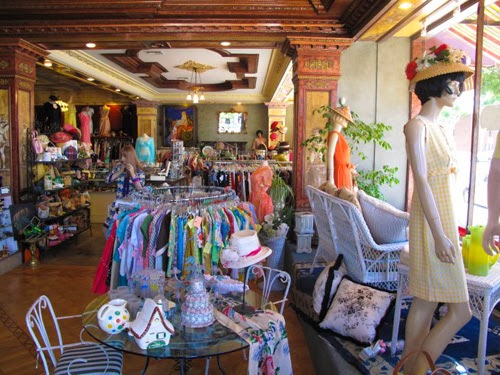
Need vintage clothes or goods? Burbank's Magnolia Park has you covered

I've posted before about the plethora of vintage clothing and merchandise shops on Burbank's Magnolia Blvd.  Today, the L.A. Times features an article about the Burbank treasure trove of vintage stores.  Click here to read.  The article focuses extensively on the gigantic Playclothes store (pictured above) and its services to the entertainment industry, but the whole area features lots of retro goods (check out The Blue Pig) and is a pretty fun walking area, too.

Saturday, August 03, 2013

Monday, January 07, 2013

Real estate surprise of the week -- a backyard vineyard in Burbank

I was showing property in the hills of Burbank saturday and lo! I discovered this secret hilltop vineyard off Country Club Drive.  I know the pic isn't very good; take my word for it; I had to climb up a hill to get it.  Ah, the discoveries to be made when showing homes for sale!

Coincidentally enough, today's L.A. Times has an article about local backyard vintners and the garagiste movement (article will explain what that is).  Most of the wine-making activity seems to be concentrated in Santa Clarita, of all places.

Monday, July 30, 2012

See?! It's NOT our imaginations! Inventory IS short!

Here's a terrific article from yesterday's L.A. Times about our short inventory.  I'm copying the whole thing (and bolding some very pertinent info), but for those of you who want a link, here it is.

Shrinking supply of homes for sale has upended market dynamics

The stock of homes listed for purchase has fallen significantly from last summer, in turn raising prices and homeowners' equity stakes and reducing total sales.

By Kenneth R. Harney

July 29, 2012

WASHINGTON — Though many home shoppers who assume they are still in a buyer's market find it hard to believe, one of the sobering fundamentals shaping real estate this summer is shrinking inventory: The supply of houses for sale has fallen significantly in most areas compared with a year earlier, sometimes dramatically so. And that is having important side effects by raising prices and homeowners' equity stakes and reducing total sales.

In major metropolitan markets from the mid-Atlantic to the West Coast, the stock of homes listed for purchase has dropped by sometimes extraordinary amounts — 50% or more below year-earlier levels in several areas of California, according to industry studies.

In Los Angeles, available inventory is 49% lower than it was last summer, San Diego by 53%, reports Redfin, a national online realty brokerage. In Seattle, listings are off 41%. In Washington and its nearby suburbs, listings are down 28%.

According to the National Assn. of Realtors, the total number of houses listed for sale across the country in June was 24% lower than a year earlier. The dearth of listings is often more intense in the lower- to mid-price ranges, less so in the upper brackets.

Just south of San Francisco, Redfin agent Brad Le says inventory in Silicon Valley is down so drastically — and demand so strong — that the bidding wars are spinning off the charts.

"We're not just talking about 10 or 15" offers, he says, "but sometimes 40 and 50."

Some buyers are inserting escalation clauses into their contracts to keep pace with counter-bids, and waiving financing contingencies, inspections and even agreeing to increase their down payments to counter any differences between the accepted sale price and the appraised value. One modest, 1,700-square-foot house recently was listed at $879,000. It drew more than 50 competing offers and sold to an all-cash buyer for $1,050,000 in less than a month.

Silicon Valley is in its own special economic niche, but inventories have declined nationwide. Online real estate and mortgage data firm Zillow reports that some of the steepest declines are in places hit the hardest during the bust, and where sizable percentages of owners still are underwater on their mortgages. In Phoenix and Miami, for example, 55% and 46% of owners, respectively, have negative equity.

Both cities have seen significant drops in inventory, and both are experiencing strong appreciation in home prices. Phoenix prices are up 14.7% for the year and Miami by 9.7%, according to data from research firm CoreLogic.

What's behind the widespread declines in listings?

Analysts say negative equity plays a major role — it discourages people who might otherwise want to sell from doing so. They don't want to take a big loss, especially in a slowly improving price environment. So they sit tight rather than list. Banks with large stocks of pre-foreclosure and foreclosed properties are doing the same, creating a so-called "shadow inventory" of houses estimated to total 1.5 million units.

Where's this all headed?

Stan Humphries, chief economist for Zillow, says the likely trend is for more of the same: Constricted supplies will lead to price increases, especially in segments of local markets where demand is strongest. Longer term, price increases will gradually rewind the cycle, increasing owners' equities and convincing more of them to list and sell. This, in turn, should put a brake on price increases, especially under today's super-strict mortgage underwriting and appraisal practices.

Bottom line for anyone looking to list or purchase any time soon: Though conditions vary by location and price segment, lower supplies of houses available for sale are changing market dynamics — putting sellers in stronger positions than they've been in years.

Sunday, July 15, 2012

The 3.8% "real estate tax," home equity lines and more -- Sunday reading

Have you been getting lots of emails warning you about the 3.8% tax that you'll pay on your house sale? Your worries are over -- L.A. Times explains it all for you here.  For those of you that don't want to read the whole article, here's the dope: "Say you and your spouse have adjustable gross income (AGI) of $325,000 and you sell your home at a $525,000 profit. Assuming you qualify, $500,000 of that gain is wiped off the slate for tax purposes. The $25,000 additional gain qualifies as net investment income under the healthcare law, giving you a revised AGI of $350,000. Since the law imposes the 3.8% surtax on the lesser of either the amount your revised AGI exceeds the $250,000 threshold for joint filers ($100,000 in this case) or the amount of your taxable gain ($25,000), you end up owing a surtax of $950 ($25,000 times 0.038)." A surtax of $950 on a $525k profit? Stop complaining.

And from Gretchen Morgenson at the NY Times, here's a column about the looming equity line of credit resets -- just when you think everybody's first mortgages are no longer such a problem, up pops the resetting interest rates on the LOCs, which are mostly 2nd mortgages.  My take is that the LOCs' interest rates were always higher because they are riskier.  Shouldn't the lending institutions take on some of this risk?

Tuesday, June 26, 2012

Wild and wacky Weslin is closed

4167 Weslin in Sherman Oaks closed last week.  What a wild ride! The house is a fixer on a large lot south of the boulevard, and was owned by Dorothy Townsend, the first female L.A. Times city desk reporter.  It then passed to a trust with 18 (!) beneficiaries.  Here's how it went:

-We listed the house at $640k since it needed work.
-The brokers' open house drew so many people that there was a traffic jam of Realtors all the way down Benedict Canyon.  I received over 100 calls about it the first two days it was listed.  This is the most activity I've ever had on a listing.  Fifteen separate parties asked me to represent them in the transaction and I said no, because concessions would have been expected during the process.
-We received 20 offers within 5 days.  The offers ranged from $555k to $725k, with most being slightly above the asking price.  Half of the offers were all cash.
- We chose the highest cash offer.  They immediately backed out because they didn't like the condition.
- We went with our first backup offer, also all cash.  They backed out because they didn't like the condition.
- By now, we had two inspection reports indicating more fixing was necessary than we had originally known.  This included foundation damage. Uh-oh.
- Flop sweat.
- The trust attorney had a couple of issues to resolve as well, which caused us to put the property on hold for 10 days.
- We went back to the original offerors and furnished the inspection reports to them.  Five of them came back with reduced offers.
- We again went with an all cash offer.  The buyer immediately released $1000 to the seller and removed all contingencies.
- Still, more flop sweat.  And still plenty of phone calls.
- ...But there were no further incidents thanks to buyers' agent Art Oganesyan and stalwart escrow officer Harlene Dunn.  The trustee was a model of patience and graciousness, too. It closed a little over two weeks later for $604k.  Whew!

Sunday, June 10, 2012

Shortage of homes creates fierce competition, says L.A. Times

Just as I've been saying and buyers have been experiencing, today's L.A. Times has a front page story about our current market, its low inventory and how wildly competitive it is.  Click here for link.  The entire article is fascinating; here are some of the more succinct quotes:

"Housing inventory has sunk to levels not seen since the bubble years. The number of American homes with a "for sale" sign hit 2.5 million in April, the lowest number for an April since 2006."

"The much-predicted foreclosure wave that was expected to dump more homes onto the market has not materialized. Fewer borrowers are entering default, and banks are better managing the properties they do have on their books."

"Also important is having enough cash to make up the difference between the negotiated price and whatever the appraised value of the home turns out to be, he said. (Lenders won't provide a mortgage for more than a home's appraised value.) Many deals these days are falling apart because appraisals are coming in low, given how many recent comparable sales have been foreclosures or other distressed properties."


Sunday, May 20, 2012

FHA may loosen condo restrictions -- this is huge

Check out this article from Sunday's L.A. Times.  FHA restrictions on condos may soon be reduced.  This should help buyers who have limited funds available for downpayments but still would like to buy a condo.  It should also help to limit short sales and foreclosures on many condos as it will expose those units to a broader group of buyers.

Friday, April 20, 2012

Home prices going up?

LATimes posted an article about rising home prices today.  Click here for the link.  Of course, the increases are miniscule and concentrated in the north of California.  But still... Prediction: we are going to see more headlines like this, at least through the rest of the quarter.  Inventory is short and a lot of buyers want to take advantage of the still-low interest rates.

Sunday, April 01, 2012

Great article on ranch home design genius Cliff May

Today's L.A. Times has a great article about ranch home design giant Cliff May.  Title should link; if not, click here. Among other elements, May and his contemporaries popularized our indoor-outdoor home design.  If you'd like to see a home that represents this kind of style, please visit me today, April 1, from 2 to 5 pm, at my open house at 1585 Knollwood Terrace in Pasadena.

Wednesday, January 18, 2012

Yet more info on Southland property flippers

I've been posting about flipped properties lately, and here's more info and statistics about that very thing from today's L.A. Times.  The short of it: investors, most of whom are likely property flippers, are crowding the low end of the market.  The title should link; if not, click here.  Some salient quotes:
"The one thing that is certainly true at the moment — because rents are rising and house prices are flat or falling — is yields on houses are pretty good right now," said Richard Green, director of the USC Lusk Center for Real Estate. "It creates a problem for ordinary people, because a lot of investors are buying with cash, and so cash buyers can buy for less money." So if it seems like there are no inexpensive homes on the market, that's why.
And "...buyers who paid all cash purchased 29% of all Southland homes in December." Statistically, many of those cash sales were in the middle- and high-price catagories, too.  I am constantly amazed by how much cash is out there.
And, perhaps the most important stat of all: "Nearly 1 in 3 homes sold last month on the resale market was a foreclosure and about 1 in 5 was a short sale."
The article also discusses price declines in December, but that usually happens at the end of the year.  My take-away is good and bad.  Obviously, even though there should be great deals on properties out there, the competition for true bargains in all price catagories is fierce and cash is king.  The good news for regular buyers is that many/most of these investors are doing some very nice rehabbing of properties.  They are spending their cash on the fixes needed so you can spend yours on your mortgage -- and tax deduction.

I think I need to start going to foreclosure auctions.